

Hey there! As a supplier of time punching machines, I often get asked how these nifty devices track attendance. In this blog, I'll break it down for you in plain English so that you can understand exactly how these time - savers work.
First things first, let's talk about the different types of time punching machines. There are a few common ones, and each has its own way of tracking attendance.
Paper Time Clocks
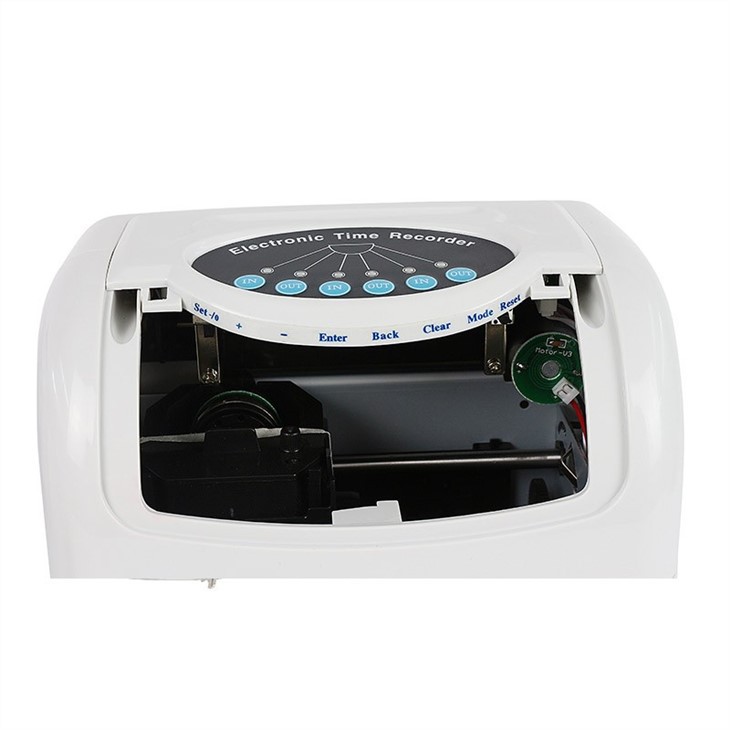
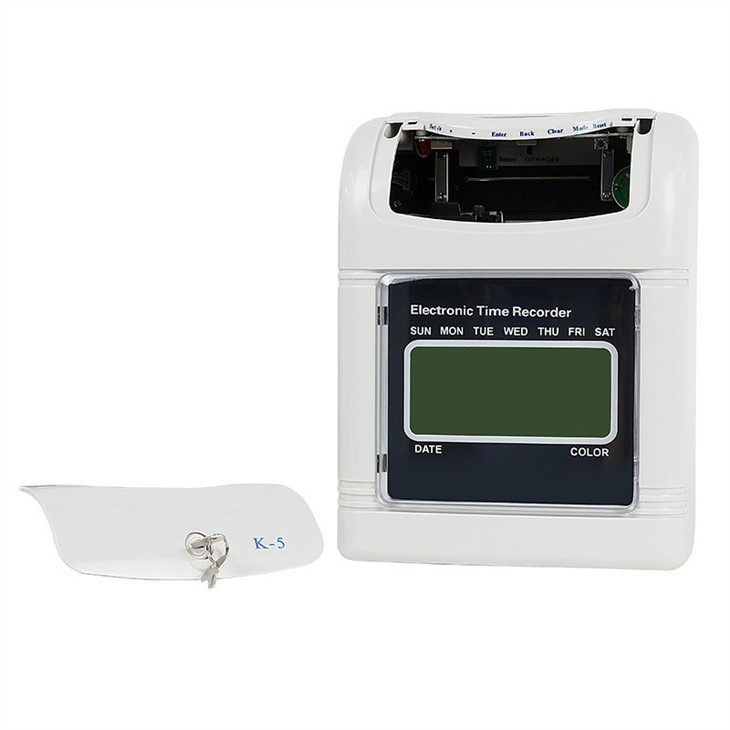
One of the oldest and simplest types of time punching machines is the paper time clock. These machines have been around for ages and are still used in many workplaces today. When an employee arrives at work or leaves, they insert a paper time card into the machine. The clock then stamps the exact time onto the card.
The way these things operate is pretty straightforward. Inside the paper time clock, there's a mechanical printing mechanism. When the card is inserted, a set of gears and levers work together to push an ink - filled stamp onto the card. The stamp shows the date and time, which is usually set manually by the employer.
These paper time clocks are great because they're low - tech and don't require any fancy software. They're also easy for employees to use. However, they do have their drawbacks. For example, the time cards can get lost or damaged, and it can be time - consuming for managers to calculate the hours worked by each employee. If you're interested in learning more about paper time clocks, you can check out paper time clock.
Digital Time Clocks
Digital time clocks are a step up from the paper ones. Instead of using paper cards, employees use a key card, barcode, or PIN to clock in and out. When an employee swipes their card or enters their PIN, the digital clock records the time in its internal memory.
The magic behind digital time clocks is in their microprocessors. These tiny computers keep track of the time and store the attendance data. They can also be connected to a computer or network, which allows managers to easily access and analyze the data.
Digital time clocks are more accurate than paper ones because they eliminate the possibility of human error in stamping the time. They're also more secure, as it's harder for employees to punch in for each other compared to paper systems. But, they do require some technical know - how to set up and maintain.
Biometric Time Clocks
Now, let's get into the really high - tech stuff: biometric time clocks. These machines use an employee's unique biological characteristics, such as fingerprints, facial features, or iris patterns, to track attendance. When an employee places their finger on the scanner or stands in front of the facial recognition camera, the machine compares the scanned data to the pre - registered data.
Biometric systems are extremely accurate. Since everyone's biological features are different, there's no way for employees to punch in for each other. This helps to prevent time theft and ensures that the attendance records are reliable.
The technology used in biometric time clocks involves complex algorithms. For example, in fingerprint scanners, the machine captures the ridges and valleys of the fingerprint and creates a mathematical template. Then, when an employee scans their finger, it compares the live scan to the template to verify their identity. You can learn more about biometric systems at employee time clock biometric system.
How the Data is Managed
Once the time punching machine records the attendance data, it needs to be managed. This is where things can get a bit more complex.
In small businesses, managers might simply collect the paper time cards (if using paper time clocks) at the end of the pay period and manually calculate the hours worked by each employee. This is a time - consuming process but is doable for a small number of employees.
For digital and biometric time clocks, the data is usually stored in the machine's internal memory or transferred to a computer system. Specialized attendance management software can then be used to analyze the data. This software can calculate the total hours worked, overtime, and absences. It can also generate reports that managers can use for payroll and other administrative tasks.
Some time punching machines even come with cloud - based solutions. This means that the attendance data is stored on remote servers, which can be accessed from anywhere with an internet connection. Cloud - based systems are great for businesses with multiple locations or remote employees.
Some Special Features
In addition to the basic attendance tracking functions, many modern time punching machines come with some cool features.
For example, some machines can be set up to restrict punching in and out during certain times. This can be useful for preventing employees from leaving early or coming in late. Others can be integrated with other business systems, such as payroll software. This makes the process of paying employees even more seamless.
There are also time punching machines that support different languages. If you have a multilingual workforce, a punch time clock in french language or one that supports other languages can make it easier for employees to use the system.
Why You Should Consider Buying from Us
As a time punching machine supplier, we offer a wide range of products to suit different business needs. Whether you're a small startup looking for a simple paper time clock or a large corporation in need of a high - tech biometric system, we've got you covered.
Our machines are reliable, easy to use, and come with excellent customer support. We understand that managing attendance is a crucial part of running a business, and we're here to make that process as smooth as possible.
If you're interested in our time punching machines or have any questions about how they work, don't hesitate to reach out. We'd love to have a chat with you and figure out the best solution for your business. Contact us today to start a discussion about your attendance tracking needs.
References
- Various industry research reports on time punching machines
- Manufacturer's technical documentation for time punching machine models
- Interviews with businesses using different types of time punching machines