

In the realm of workforce management, time recorders play a pivotal role in accurately tracking employee work hours. As a trusted time recorder supplier, we understand the diverse needs of businesses and offer a range of printing options to meet those requirements. In this blog post, we will explore the various printing options available for time recorders and how they can benefit your organization.
1. Traditional Paper Printing
The most common and traditional printing option for time recorders is paper-based printing. This method involves using a paper time clock to record employee time data on punch cards or time sheets. The time recorder imprints the date, time, and other relevant information directly onto the paper, providing a tangible record of employee attendance.
-
Advantages
- Tangibility: Paper records are physical and can be easily stored and accessed. They provide a clear and visible record of employee attendance, which can be useful for auditing and compliance purposes.
- Simplicity: Paper-based systems are relatively simple to use and understand. Employees can easily punch in and out using the time clock, and managers can quickly review the printed records.
- Cost-Effective: Paper time clocks are generally more affordable than electronic alternatives, making them a cost-effective option for small and medium-sized businesses.
-
Disadvantages
- Manual Data Entry: Paper records require manual data entry, which can be time-consuming and prone to errors. This can lead to inaccuracies in payroll processing and employee attendance tracking.
- Limited Storage Space: Paper records take up physical space and can be difficult to organize and store. Over time, the volume of paper records can become overwhelming, making it challenging to retrieve specific information.
- Environmental Impact: The use of paper time clocks contributes to deforestation and environmental pollution. As businesses become more environmentally conscious, there is a growing demand for more sustainable time recording solutions.
2. Electronic Printing
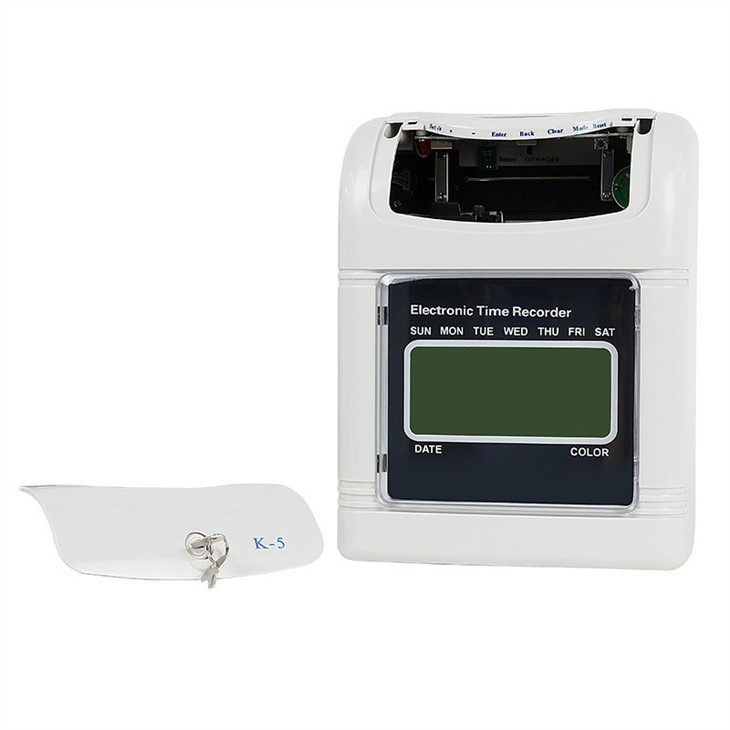
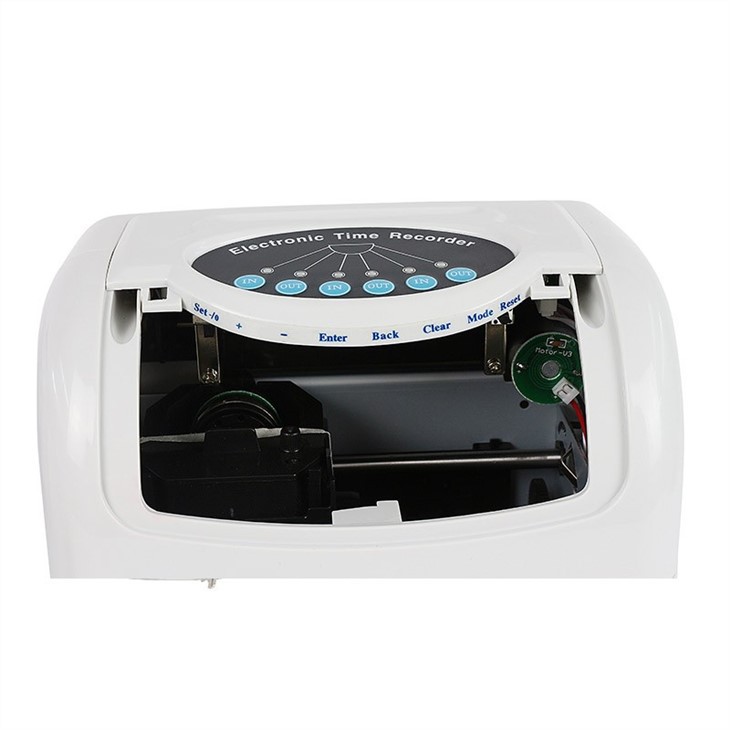
With the advancement of technology, electronic printing has become an increasingly popular option for time recorders. Electronic time recorders use digital technology to record and store employee time data, eliminating the need for paper records.
-
Advantages
- Accuracy: Electronic time recorders provide accurate and reliable time tracking data. They eliminate the risk of human error associated with manual data entry, ensuring that employee attendance records are accurate and up-to-date.
- Efficiency: Electronic time recorders automate the time tracking process, saving time and effort for both employees and managers. Employees can punch in and out using a variety of methods, such as biometric scanners, proximity cards, or mobile devices, and the time data is automatically recorded and stored in the system.
- Data Analysis: Electronic time recorders provide detailed time tracking data that can be analyzed to identify trends and patterns in employee attendance. This information can be used to make informed decisions about workforce management, such as scheduling, overtime, and employee performance.
- Remote Access: Electronic time recorders can be accessed remotely, allowing managers to monitor employee attendance from anywhere, at any time. This is particularly useful for businesses with multiple locations or remote employees.
-
Disadvantages
- Initial Investment: Electronic time recorders require an initial investment in hardware and software, which can be costly for some businesses. However, the long-term benefits of electronic time tracking, such as increased efficiency and accuracy, often outweigh the initial investment.
- Technical Complexity: Electronic time recorders require technical knowledge and expertise to install, configure, and maintain. This can be a challenge for some businesses, particularly those with limited IT resources.
- Dependence on Technology: Electronic time recorders rely on technology, such as computers, servers, and networks, to function. If there is a technical problem or outage, it can disrupt the time tracking process and cause delays in payroll processing.
3. Thermal Printing
Thermal printing is a type of electronic printing that uses heat to transfer ink onto paper. Thermal printers are commonly used in time recorders because they are fast, reliable, and produce high-quality prints.
-
Advantages
- Fast Printing Speed: Thermal printers can print at high speeds, making them ideal for busy workplaces where employees need to punch in and out quickly.
- Low Maintenance: Thermal printers have fewer moving parts than traditional printers, which means they require less maintenance and are less likely to break down.
- High-Quality Prints: Thermal printers produce high-quality prints that are clear and legible. The prints are also resistant to smudging and fading, ensuring that the time records remain accurate and readable over time.
-
Disadvantages
- Limited Color Options: Thermal printers typically only print in black and white, which may not be suitable for some applications.
- Cost of Printing Supplies: Thermal printers require special thermal paper, which can be more expensive than traditional printer paper.
4. Dot Matrix Printing
Dot matrix printing is another type of electronic printing that uses a print head to strike an ink ribbon against the paper, creating a series of dots that form characters and images. Dot matrix printers are commonly used in time recorders because they are durable, reliable, and can print on a variety of paper types.
-
Advantages
- Durability: Dot matrix printers are designed to withstand heavy use and can operate in harsh environments. They are also less likely to break down than other types of printers, making them a reliable option for busy workplaces.
- Versatility: Dot matrix printers can print on a variety of paper types, including continuous feed paper, multi-part forms, and envelopes. This makes them suitable for a wide range of applications, such as payroll processing, invoicing, and shipping labels.
- Low Cost: Dot matrix printers are generally more affordable than other types of printers, making them a cost-effective option for small and medium-sized businesses.
-
Disadvantages
- Slow Printing Speed: Dot matrix printers are slower than other types of printers, which can be a disadvantage in busy workplaces where time is of the essence.
- Noise: Dot matrix printers can be noisy, which can be a distraction in the workplace.
- Print Quality: Dot matrix printers produce prints that are less sharp and clear than other types of printers. The prints may also be prone to smudging and fading over time.
5. Laser Printing
Laser printing is a type of electronic printing that uses a laser beam to transfer toner onto paper. Laser printers are commonly used in time recorders because they are fast, efficient, and produce high-quality prints.
-
Advantages
- Fast Printing Speed: Laser printers can print at high speeds, making them ideal for busy workplaces where employees need to punch in and out quickly.
- High-Quality Prints: Laser printers produce high-quality prints that are clear and sharp. The prints are also resistant to smudging and fading, ensuring that the time records remain accurate and readable over time.
- Low Cost per Page: Laser printers have a low cost per page, making them a cost-effective option for businesses that need to print a large volume of time records.
-
Disadvantages
- Initial Investment: Laser printers require an initial investment in hardware and toner, which can be costly for some businesses.
- Technical Complexity: Laser printers require technical knowledge and expertise to install, configure, and maintain. This can be a challenge for some businesses, particularly those with limited IT resources.
- Environmental Impact: Laser printers use toner cartridges, which can be harmful to the environment if not disposed of properly.
Conclusion
As a time recorder supplier, we offer a range of printing options to meet the diverse needs of businesses. Whether you prefer traditional paper printing or the latest electronic printing technology, we have a solution that is right for you. Our time recorders are designed to be reliable, accurate, and easy to use, helping you to manage your workforce more effectively and efficiently.
If you are interested in learning more about our time recorders and printing options, please visit our website at Electronic Time Recorder, paper time clock, or Electronic Punch Card Time Recorder. Our team of experts is available to answer any questions you may have and to help you choose the right time recorder for your business. Contact us today to start a conversation about your time recording needs.
References
- "Time Recording Systems: A Comprehensive Guide." Workforce Management Magazine.
- "The Benefits of Electronic Time Tracking." HR Magazine.
- "Choosing the Right Time Recorder for Your Business." Small Business Trends.