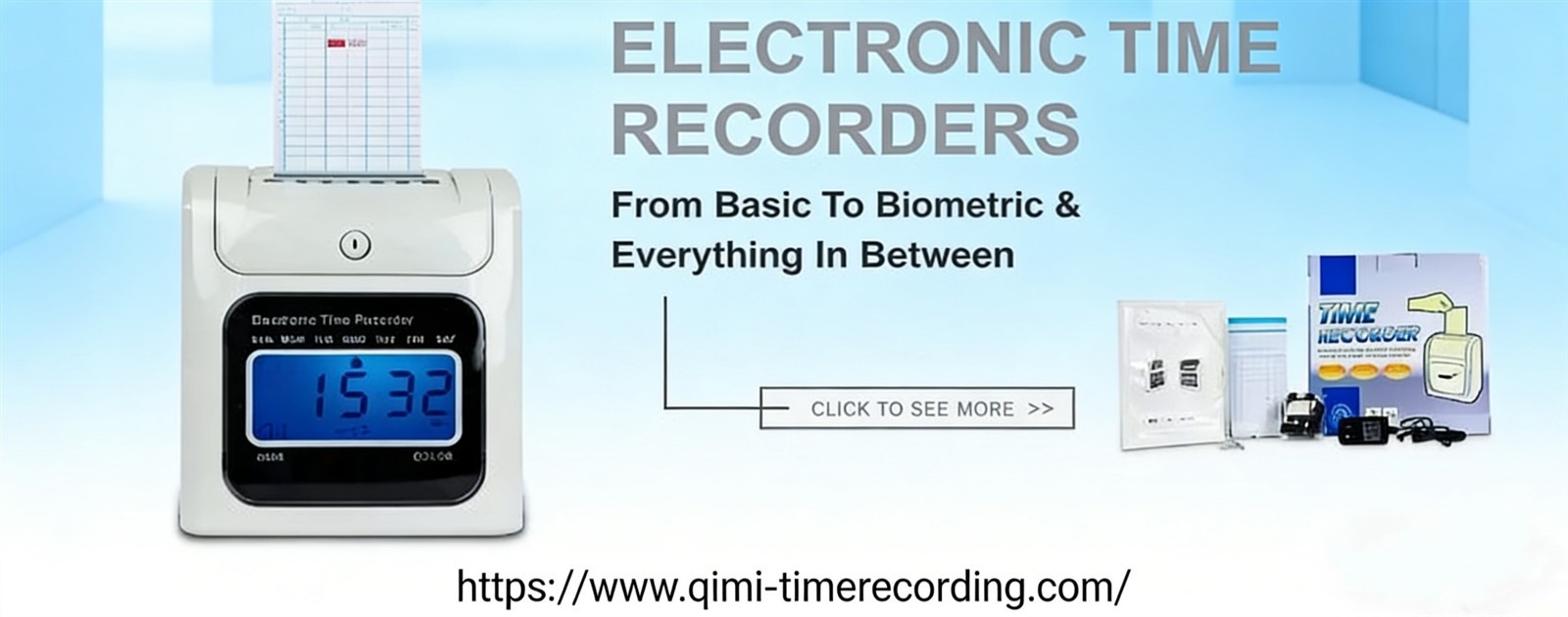
1. Evolution of Time & Attendance Technology
From mechanical punch clocks to biometric fingerprint systems and cloud-based solutions, attendance technology has evolved dramatically over the past decades. Early mechanical devices required manual calibration and frequent maintenance. Modern electronic time recorders improved accuracy and durability, while biometric systems eliminated time theft and buddy punching. Today, businesses choose between card-based machines, fingerprint terminals, facial recognition devices, and mobile attendance apps based on their budget, team size, and working environment.
2. Why Card Punch Time Recorders Remain Popular Globally
Despite advanced biometric options, card punch time recorders still dominate many markets, especially in Asia, Africa, Latin America, and the Middle East. They are affordable, easy to operate, require no internet connection, and produce physical records that simplify payroll and labor audits. For small factories, retail stores, and businesses with unstable power or network, card-based time clocks remain the most reliable and cost-effective choice.
3. Key Benefits of Biometric Attendance Systems
Biometric fingerprint and facial recognition devices provide high-security employee verification. They prevent unauthorized clock-ins, eliminate time fraud, reduce payroll errors, and streamline workforce management. These systems are widely used in medium to large enterprises, manufacturing plants, logistics centers, and office buildings where accuracy and accountability are critical.
4. The Importance of Backup Power in Attendance Machines
In regions with frequent power outages, a built-in backup battery is essential for uninterrupted attendance recording. Machines with battery support maintain time settings, store attendance data, and continue operating during blackouts. This feature prevents data loss, payroll disputes, and management disruptions, making it highly valued in factories, construction sites, and remote work areas.
5. Global Market Demand for Attendance Equipment
Demand for reliable, low-maintenance time recorders continues to grow worldwide. Emerging markets prioritize durability, wide voltage compatibility, and offline functionality. European and North American buyers focus on data security, software integration, and eco-friendly design. Spanish-speaking, Arabic, and Southeast Asian markets show strong demand for multi-language support and region-specific customization.
6. Labor Law Compliance & Attendance Records
Accurate attendance records are legally required in most countries to verify working hours, overtime, leave, and late arrivals. Printed time cards or digital attendance logs serve as official evidence during labor inspections. Businesses using certified time attendance machines reduce legal risks and simplify compliance with local employment regulations.
7. How Attendance Machines Improve Business Efficiency
Automated time recording reduces manual data entry, minimizes payroll mistakes, speeds up monthly closing, and improves staff punctuality. Well-organized attendance systems also lower administrative workload, prevent wage disputes, and create a more disciplined workplace environment.
8. Material & Build Quality for Industrial Use
Industrial-grade time recorders use sturdy ABS housing, anti-thunder circuits, and wide temperature resistance to withstand dust, humidity, and heavy daily use. High-quality sensors and printing mechanisms ensure long service life and reduce maintenance costs, which is especially important for factory and workshop environments.