


Binding is an essential part of office document finishing, and comb binding and wire binding are the two most mainstream binding methods in offices, printing shops and educational institutions. Many users cannot distinguish the applicable scenarios and advantages of the two binding methods, resulting in poor document finishing effect and unprofessional presentation.
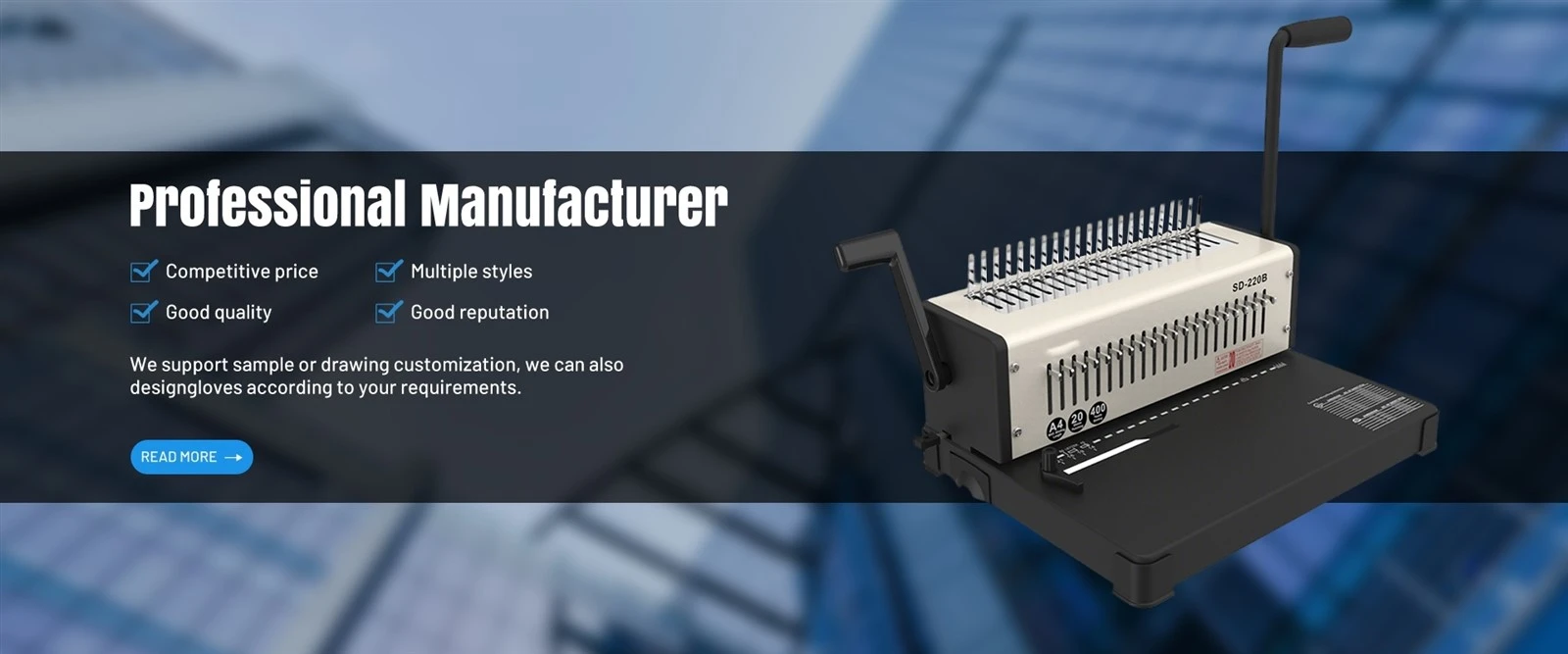
Comb binding uses plastic loop combs for binding, with the characteristics of low cost, simple operation and reusable disassembly. The comb binding machine has low operation difficulty, fast punching and binding speed, and is suitable for daily office documents, student course materials, ordinary reports and temporary documents. The plastic comb has rich colors, which can simply beautify documents, and the loose-leaf design supports random addition and deletion of pages, which is very convenient for document modification and update.
Wire binding adopts metal double-loop wire binding, with firmer binding effect, flatter appearance and higher grade. Wire-bound documents are neat and durable, not easy to loose and deform after long-term storage, and can be flipped 360 degrees without obstruction. It is suitable for formal documents with high appearance and quality requirements, such as business proposals, tender documents, graduation papers and official printed materials.
In terms of selection, for daily low-frequency binding, temporary documents and cost-sensitive scenarios, comb binding is the best choice. For formal business occasions, long-term preserved documents and high-standard printed materials, wire binding is more professional and durable. Users can match binding methods according to document attributes and usage scenarios to improve document finishing quality.
If you need bulk quotation or OEM customization, contact our sales team via WhatsApp86=13728420209/Email:wendy@qimi-timerecording.com
If you need bulk quotation or OEM customization, contact our sales team via WhatsApp86=13728420209/Email:wendy@qimi-timerecording.com