

Hey there! As a punch clock supplier, I've seen firsthand the evolution of time - tracking technology. Biometric punch clocks have become a game - changer in the world of workforce management, and today I'm gonna share with you the awesome advantages of using them.
1. Enhanced Security
One of the most significant perks of biometric punch clocks is the top - notch security they offer. Traditional methods like paper time clock or swipe cards are prone to security breaches. For example, an employee could easily lend their card to a colleague, allowing them to clock in or out fraudulently. This practice, known as "buddy punching," can lead to inaccurate time records and financial losses for businesses.
Biometric systems, on the other hand, rely on unique physical or behavioral characteristics such as fingerprints, facial features, or iris patterns. These features are almost impossible to replicate, so there's no way an unauthorized person can clock in for someone else. It gives business owners peace of mind knowing that the time records are accurate and that only their employees are punching in and out.
2. Accuracy in Time Tracking
Let's face it, manual time - tracking methods are error - prone. With paper time clock, employees might forget to punch in or out, or they could make mistakes when writing down their hours. This can lead to miscalculations in payroll, which can be a headache for both the employer and the employees.
Biometric punch clocks eliminate these issues. They record the exact time when an employee punches in and out, down to the second. This level of accuracy ensures that employees are paid for the exact amount of time they've worked. It also helps in avoiding disputes over hours worked, as the data is objective and cannot be easily manipulated.
3. Efficiency and Productivity
Biometric punch clocks are incredibly fast. Employees can clock in or out in just a few seconds, which saves a lot of time compared to traditional methods. For example, with a paper time clock, an employee might have to search for their card, find the right slot, and then punch it. This process can take up to a minute or more, especially if there are a lot of employees trying to clock in at the same time.
The time saved by using biometric punch clocks can be better utilized for actual work. It also reduces the congestion at the time - clock area, which means employees can get to their workstations faster and start being productive. Additionally, the automated nature of biometric systems reduces the administrative burden on managers. They no longer have to spend hours manually calculating and verifying time records, allowing them to focus on more important tasks.
4. Cost - Effectiveness in the Long Run
When you first think about investing in biometric punch clocks, you might be put off by the initial cost. However, when you look at the long - term benefits, it's a smart investment. First of all, by eliminating buddy punching and inaccurate time - tracking, you're reducing payroll errors. This means you're not overpaying employees for hours they didn't work, which can save a significant amount of money over time.
Secondly, the efficiency gains from using biometric punch clocks translate into increased productivity. More work gets done in less time, which can lead to higher revenues. Also, compared to constantly buying paper time clock cards and maintaining traditional time - tracking equipment, biometric systems have lower maintenance costs in the long run.
5. Integration with Other Systems
Biometric punch clocks can easily integrate with other business systems such as payroll software and human resources management systems. This integration allows for seamless data transfer, which further streamlines the administrative processes. For example, the time data collected by the biometric punch clock can be automatically imported into the payroll software, eliminating the need for manual data entry.
This not only saves time but also reduces the risk of errors that can occur during data entry. It also provides a more comprehensive view of employee attendance and hours worked, which can be useful for HR managers when making decisions about employee performance, promotions, and scheduling.
6. User - Friendly
Most biometric punch clocks are designed to be user - friendly. They have simple interfaces that are easy for employees to understand and use. Whether it's a fingerprint scanner or a facial recognition system, employees can quickly learn how to clock in and out. There's no need for them to carry around cards or remember passwords, which makes the process hassle - free.
7. Compliance with Labor Laws
Accurate time - tracking is crucial for compliance with labor laws. Many countries and states have strict regulations regarding employee working hours, overtime, and breaks. Biometric punch clocks provide detailed and accurate records of employee attendance, which can be used to prove compliance in case of an audit.
Businesses that use biometric punch clocks can avoid costly fines and legal issues associated with non - compliance. It also shows that the company is committed to following the law and treating its employees fairly.
8. Customization
Biometric punch clocks can be customized to meet the specific needs of different businesses. For example, some systems allow you to set up different access levels for different employees or departments. You can also configure the system to send alerts when an employee punches in or out outside of their scheduled hours.
This level of customization gives businesses more control over their time - tracking processes and allows them to tailor the system to their unique requirements.
Real - World Examples
Let's take a look at a real - world example. A manufacturing company was using a paper time clock system, and they were facing a lot of issues with buddy punching and inaccurate time records. After switching to a biometric punch clock system, they noticed a significant reduction in payroll errors. They also found that employees were more punctual, as there was no way to cheat the system.
Another example is a large retail chain. They were using swipe cards for time - tracking, but the cards were often lost or stolen. After implementing biometric punch clocks, they eliminated these problems. The employees found the new system easier to use, and the managers were able to focus on other aspects of the business instead of dealing with time - tracking issues.
Conclusion
In conclusion, biometric punch clocks offer a wide range of advantages for businesses of all sizes. From enhanced security and accuracy in time - tracking to cost - effectiveness and integration with other systems, they are a smart investment for any company looking to improve its workforce management.
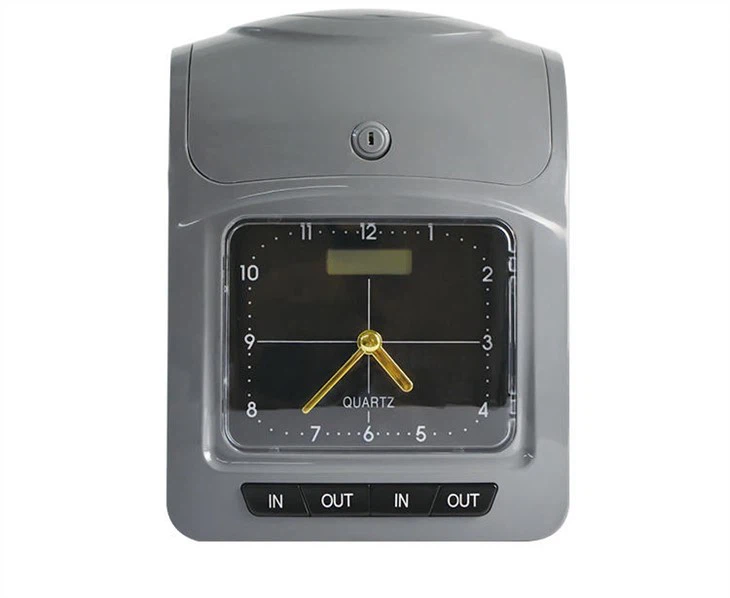

If you're interested in learning more about biometric punch clocks or are considering making a purchase, I'd love to have a chat with you. Contact me to start a discussion about how our biometric punch clocks can benefit your business. We can explore the different options available and find the perfect solution for your specific needs. Let's take your workforce management to the next level!
References
- "The Impact of Biometric Time - Tracking Systems on Employee Productivity" - Journal of Business Management
- "Security and Accuracy in Modern Time - Tracking Technologies" - International Journal of Human Resources Management