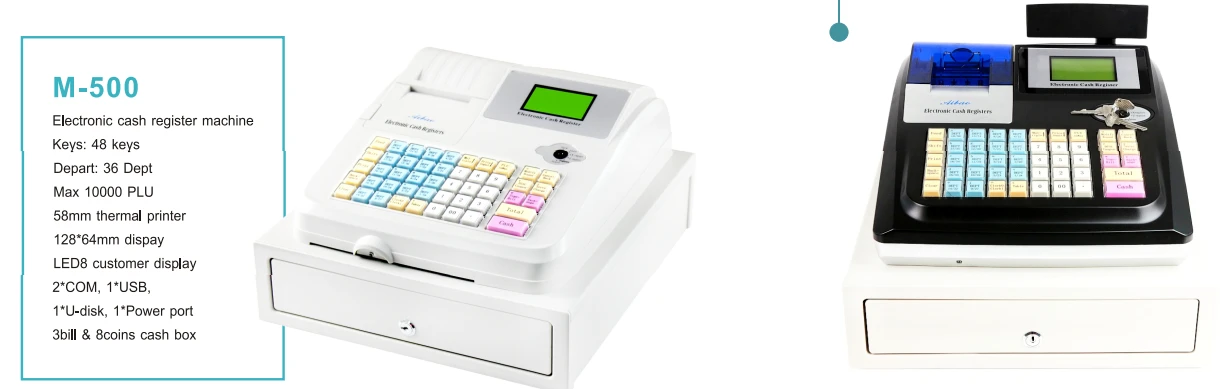
A cash register is an essential device used in businesses to process transactions and manage cash flow. It was first invented in 1879 by James Ritty, who was a saloon owner looking to prevent his employees from stealing cash. His invention, called the "Incorruptible Cashier," was the first mechanical cash register, and it worked by recording every sale made and displaying the transaction amount to both the cashier and the customer.
Since then, cash registers have undergone significant advancements, replacing mechanical components with electronic ones. Today, modern cash registers come equipped with various features such as barcode scanners, touch screens, electronic payment options, and even connectivity to the cloud for data management.
Cash registers are widely used in various settings, including retail stores, restaurants, fast-food chains, and service-based establishments. They help businesses streamline operations, improve accuracy, and reduce errors while keeping track of cash flow, inventory, and sales data.
The convenience of cash registers has also extended to consumers, who no longer need to carry exact change, thanks to the ability to make payments using credit and debit cards. Additionally, many register systems now offer rewards programs, customer data tracking, and other features that promote loyalty and enhance the customer experience.
Overall, cash registers have greatly transformed the way businesses operate and have made it easier for consumers to conduct transactions. As technology continues to advance, it's exciting to see what further innovations will come, helping to simplify and improve the way we conduct financial transactions.