

In the modern business environment, effective management of employee attendance is crucial for maintaining productivity, ensuring fair compensation, and complying with labor regulations. One tool that has been commonly used for this purpose is the employee punch clock. But the question arises: Can an employee punch clock be used for real - time monitoring of employee attendance? As a supplier of employee punch clocks, I'd like to delve into this topic and provide some insights.
The Basics of Employee Punch Clocks
Employee punch clocks have a long - standing history. Traditional punch clocks used physical punch cards, where employees would insert their cards into the machine at the start and end of their work shifts. The machine would then make a hole or print a time stamp on the card. These days, we have more advanced digital versions. For instance, our time attendance terminal is equipped with an LCD backlight, providing clear time - stamping and easy - to - read displays.
Real - Time Monitoring Capabilities
The short answer is yes, modern employee punch clocks can be used for real - time monitoring of employee attendance. With the integration of advanced technologies such as cloud computing and internet connectivity, punch clocks can now transmit attendance data instantaneously to a central server. This means that managers can access up - to - the - minute information about who has clocked in or out, and at what time.
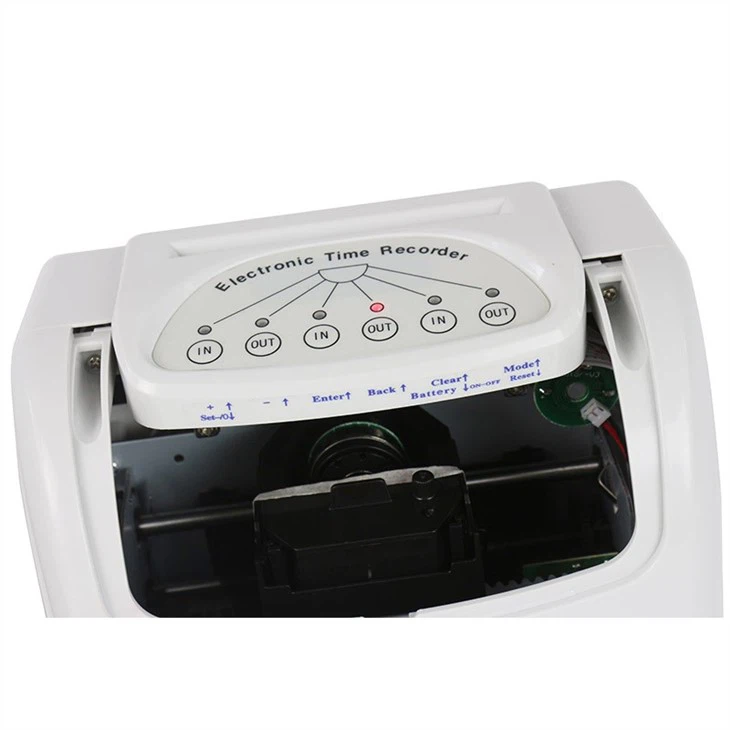
For example, our punch card time clock for sale is an electronic device that not only records time accurately but also has the ability to send data in real - time. Managers can log in to a dedicated software platform to view current attendance statuses, track late arrivals or early departures, and even generate reports on demand.
This real - time monitoring feature offers several benefits. Firstly, it allows for immediate intervention in case of irregularities. If an employee forgets to clock in or is late, the manager can be notified right away and take appropriate action, such as reminding the employee or adjusting the work schedule. Secondly, it provides accurate data for payroll processing. By having real - time attendance records, there is less room for errors in calculating employee work hours and pay.
Limitations and Challenges
However, it's important to acknowledge that there are also some limitations and challenges when using employee punch clocks for real - time monitoring. One of the main drawbacks is the reliability of the technology. Technical glitches, such as network outages or software malfunctions, can disrupt the real - time data transmission. This may lead to inaccurate or incomplete attendance records.
Another issue is the potential for employee resistance. Some employees may feel that real - time monitoring is an invasion of their privacy. They may be uncomfortable with the idea that their every move in terms of clocking in and out is being closely watched. This can lead to a negative impact on employee morale and job satisfaction.
Solutions to Overcome Challenges
To address the technology - related challenges, we offer a time clock add up Machine that is designed with high - quality components and software. We also provide regular updates and maintenance services to ensure the smooth operation of the devices. In case of network issues, the punch clock has a local storage function, so attendance data can be stored temporarily and synchronized once the network is restored.
Regarding employee concerns, it's essential for employers to communicate the purpose of real - time monitoring clearly. Explain that it is not about distrust but rather about ensuring fairness, optimizing work processes, and complying with labor laws. Offering employees some level of control, such as allowing them to correct minor time - entry errors themselves, can also help alleviate their concerns.
Use Cases in Different Industries
The ability to use employee punch clocks for real - time monitoring has different applications in various industries. In the manufacturing sector, where production schedules are tight and every minute counts, real - time attendance monitoring can help ensure that there are enough workers on the production line at all times. If an employee is absent or late, the supervisor can quickly arrange for a replacement, minimizing production delays.

In the service industry, such as restaurants or hotels, real - time attendance data can be used to manage staffing levels based on customer demand. For example, if there is a sudden rush of customers, managers can check who is currently on - site and available to provide service.
Security and Data Protection
When it comes to real - time monitoring using employee punch clocks, security and data protection are of utmost importance. Our punch clocks are equipped with advanced encryption technologies to safeguard the attendance data. We also follow strict data protection regulations to ensure that the information about employees is stored and used in a responsible manner. Only authorized personnel have access to the attendance data, and measures are in place to prevent data breaches.
Conclusion
In conclusion, an employee punch clock can indeed be used for real - time monitoring of employee attendance. It offers significant advantages in terms of productivity management, payroll accuracy, and compliance. However, it also comes with certain challenges that need to be addressed. At our company, we are committed to providing high - quality punch clock solutions that not only enable real - time monitoring but also minimize the associated risks.
If you are interested in exploring how our employee punch clocks can benefit your organization, we encourage you to get in touch with us for a discussion. We can provide more detailed information, arrange product demonstrations, and offer customized solutions based on your specific needs. Let's work together to enhance your workforce management efficiency.
References
- Allen, D. G., & Scott, K. S. (2007). Fundamental considerations and implications related to employee reactions to electronic performance monitoring. Journal of Management, 33(3), 350 - 381.
- Becton, J. B., Walker, H. J., & Jones - Farmer, A. M. (2014). Electronic performance monitoring: A perceived fairness perspective. Journal of Business and Psychology, 29(4), 535 - 548.
- Stephenson, J. I., McGinnis, J. D., & Moore, S. W. (2007). The impact of employee perceptions of electronic performance monitoring on commitment. Public Personnel Management, 36(2), 187 - 202.